GRASSP and Outcome Measures

GRASSP and Outcome Performance Measures

Neural Outcomes Consulting Inc works with health care professionals and researchers to aid the performance of cutting edge research with state-of-the-art trial design. We specialize in oncology, neurological and musculoskeletal disease. With a special interest and experience in the development and use of outcome measures, NOCI optimizes any clinical study or trial with the implementation of the most appropriate outcome measures.

GRASSP Version 1.0

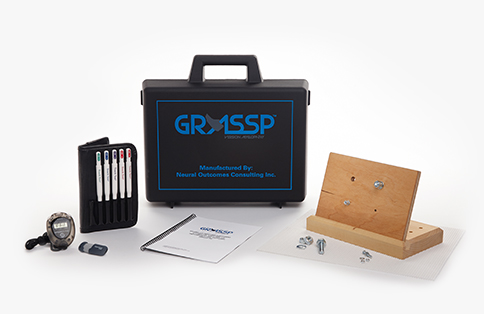
The Graded Redefined Assessment of Sensation, Strength and Prehension (GRASSP) is a multi-domain outcome measure sensitive to the changes in the upper limb throughout disease progression. The GRASSP Research and Design Team, led by Dr. Kalsi-Ryan, has completed it’s development and established its psychometric properties of reliability, validity and responsiveness. GRASSP development and revisions are ongoing. Multi-national collaborations are also defining new analysis approaches for the use of GRASSP in SCI clinical trials. The European launch of GRASSP Version 2 occurred at the 2017 ISCoS Annual Meeting held in Dublin Ireland on October 24-26 while the North American launch took place at the 7th National Spinal Cord Injury Conference that was held on November 9-11, 2017 in Niagara Falls, Ontario. GRASSP Version 2 translated are now available in German, Italian, Czech, Spanish and English.
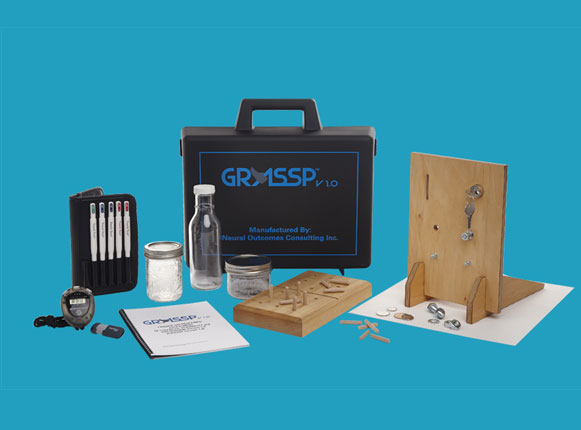
VERSIONS AND ONGOING DEVELOPMENT
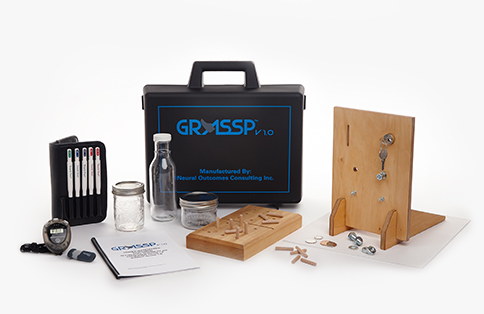
GRASSP Version 1 (GV1)

Development Year: 2006 

The Graded Redefined Assessment of Strength, Sensibility and Prehension (GRASSP V1) is a standardized clinical tool designed to evaluate upper limb function in individuals with cervical spinal cord injury (SCI). It measures strength, sensation, and prehension to determine hand function and neurological recovery.

Developed by Dr. Sukhvinder Kalsi-Ryan and the GRASSP Development and Research Group, GRASSP V1 provides clinicians and researchers with detailed insights into motor and sensory impairment, supporting rehabilitation planning and outcome tracking.

License held by: Neural Outcomes Consulting Inc.; Commercial and educational required for research, clinical, and commercial use

Intended Population: Cervical spinal cord injury (acute to chronic).

[Learn More →]

GRASSP Version 2 (GV2)

Development Year: 2019 

GRASSP V2 refines and expands upon the original assessment, offering enhanced measurement precision for upper limb function in cervical SCI. It incorporates updated scoring algorithms, improved item definitions, and a digital scoring interface for clinical and research applications. The second version of GRASSP has gone through a process of item reduction based on the following data:

5. Input from clinicians and their experiences with patients
6. Rasch analysis of the European dataset
7. Validation of the European rasch analysis with the Canadian dataset
8. Comparison analysis of manual muscle testing (isometric vs. isotonic)

Validated across international SCI cohorts, GRASSP V2 strengthens standardization for clinical trials, rehabilitation programs, and longitudinal recovery tracking.

License held by: Neural Outcomes Consulting Inc.; Commercial and educational license held by NOCI.  use permitted under agreement for clinical trials, research and institutional applications.

Intended Population: Cervical spinal cord injury (acute through chronic).

[Learn More →]


GRASSP Version Myelopathy (GVM)

Development Year: 2021

GRASSP Myelopathy (GVM) is a modified version of the original GRASSP assessment, specifically designed to measure upper limb dysfunction in individuals with cervical non-traumatic spinal cord injury, including degenerative cervical myelopathy and cord compression caused by tumors, abscesses, or vascular lesions.
It integrates sensory, motor, and dexterity measures to detect subtle functional changes unique to this population, supporting sensitive tracking of deterioration, recovery, and rehabilitation outcomes.

License Held By: Neural Outcomes Consulting Inc.
Distributed through NOCI for validated research and clinical program use.

Intended Population: Individuals with cervical non-traumatic spinal cord injury and degenerative cervical myelopathy

[Learn More →]

Toronto Rehab Institute Hand Function Test (TRI-HFT)

Development Year: 2012 |  Sponsoring Institution: Toronto Rehab Institute

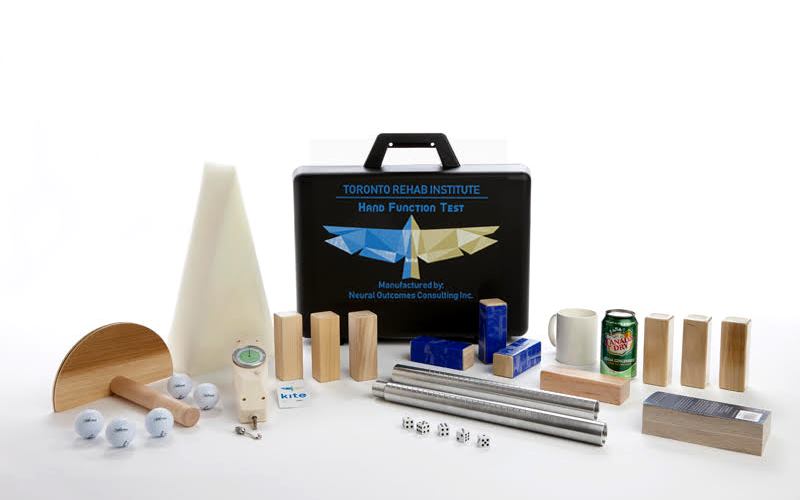
The TRI-HFT is a clinical assessment designed to measure gross motor upper extremity function in individuals with arm and hand impairment due to spinal cord injury or stroke.
It evaluates functional performance following interventions such as neuromodulation or tendon and peripheral nerve transfer, allowing clinicians to track recovery across the continuum of care and identify clinically meaningful changes in upper limb ability over time.
Administration is intended for trained physical or occupational therapists in clinical environments, with standardized training recommended for research and clinical trial contexts.

License Held By: Neural Outcomes Consulting Inc. Distributed through NOCI for validated research and clinical program use.

Intended Population: Individuals with upper limb impairment following spinal cord injury or stroke

[Learn More →]

Grasp and Release Test (GRT)

Development Year: 1996 | Sponsoring Institutions:  Case Western Reserve University & VA Medical Center (Cleveland, OH)

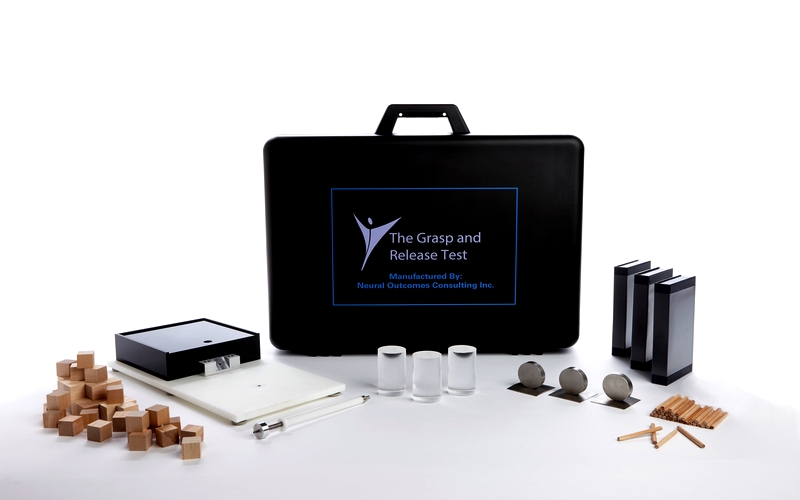
The Grasp and Release Test (GRT) measures hand function and prehension control in individuals with tetraplegia using functional electrical stimulation (FES) or other hand assistive interventions. It assesses object manipulation across multiple grasp types and sizes.

Developed to quantify functional outcomes in neuroprosthetic and assistive technology research, the GRT remains a key benchmark in evaluating upper limb recovery and intervention efficacy.

License: Non-Exclusive academic and research referenced by Neural Outcomes Consulting Inc. for standardized outcome comparison.

Intended Population: Cervical spinal cord injury.
IP Holder –

[Download Instructional Manual →]

Capabilities of Upper Extremity Test (CUE-T)

Development Year: 2010 

Developed by Thomas Jefferson University, the CUE-T is a clinician-administered assessment used to evaluate functional upper extremity capability in individuals with tetraplegia. It measures the ability to perform specific arm and hand tasks that reflect real-world functional performance.

Developed under the U.S. Spinal Cord Injury Model Systems, the CUE-T provides standardized data for clinical outcome measurement, research studies, and therapy planning.

License: Commercial and educational license held by NOCI. Managed and distributed through NOCI for clinical, educational and research use. 

Intended Population: Cervical spinal cord injury.

[Learn More →]

Chedoke-McMaster Stroke Assessment Test

Development Year: 1995 | Sponsoring Institutions: Hamilton Health Sciences and McMaster University

The Chedoke-McMaster Stroke Assessment (CMSA) is a validated clinical tool used to evaluate motor recovery and functional performance after stroke. It includes two key parts: the Impairment Inventory, which rates recovery across major body regions using a 7-stage scale, and the Activity Inventory, which measures gross motor and walking performance.

Developed by Carolyn Gowland and collaborators, the CMSA demonstrates high reliability and validity, making it a standard in both clinical rehabilitation and stroke research. It supports treatment planning, goal setting, and progress tracking across the continuum of care.

License held by: Commercial and educational license held by Neural Outcomes Consulting Inc.

Intended Population: Acute to chronic stroke, single or repeated assessment.

[Learn More →]


Spinal Cord Independence Measure (SCIM) III and (SCIM) IV

Development Year: 1997 | Sponsoring Institution: Loewenstein Rehabilitation Hospital, Israel

The SCIM is a comprehensive, SCI-specific instrument that evaluates functional independence across three domains: self-care, respiration and sphincter management, and mobility. It is the most widely used standardized outcome measure for functional recovery following spinal cord injury.

Validated internationally, the SCIM enables rehabilitation benchmarking, outcome tracking, and clinical research applications.

License: Exclusive Academic and non exclusive research license held by NOCI

Intended Population: Spinal cord injury (all levels and severities).

[Learn More →]

NeuRx Diaphragm Pacing System (DPS)®

Development Year: 2005

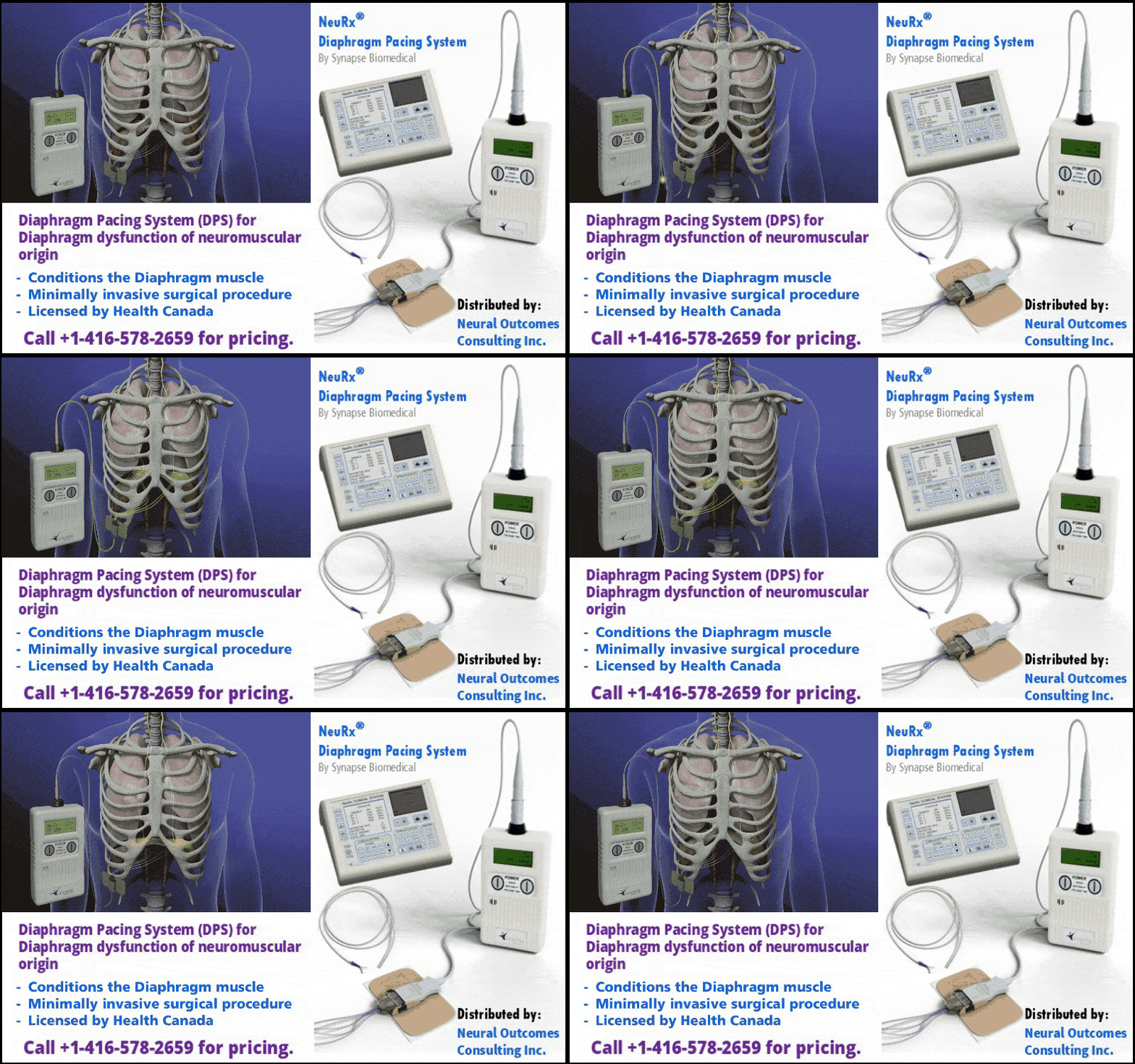
The NeuRx Diaphragm Pacing System (DPS)® is an implantable neurostimulation technology designed to support more natural breathing in patients with diaphragm dysfunction resulting from neuromuscular conditions.
It delivers ventilatory assistance for individuals with high-level spinal cord injury, central hypoventilation syndromes, or other respiratory impairments by activating the diaphragm rather than relying solely on mechanical ventilation. Compact, silent, and built without moving parts, NeuRx DPS enables enhanced respiratory independence and quality of life for eligible patients.

License Held By: Synapse Biomedical Inc. Approved by Health Canada for sale in Canada.
Distributed exclusively in Canada through Neural Outcomes Consulting Inc. (NOCI), including device consumables and clinical program support.

Intended Population: Individuals experiencing neurological respiratory compromise, including those with high cervical spinal cord injury, central hypoventilation, or neuromuscular respiratory impairment.

[Learn More →]

RANGE OF MOTION ASSESSMENT TOOL KITS

The ROM Assessment Kit was developed for Daiichi Sankyo Development LTD (“DSI”): THE ENLIVEN STUDY.

The kit includes a 12 inch, 6 inch and digit goniometers along with a measuring tape. This is a complete kit that enables a clinician to perform any ROM testing. NOCI manufactures and distributes these kits for retail sales.